STS as public work
We treat science and technology as social, political, material, and historical practices, not as forces outside society.
Current Layer
STS-IN Main Website
The institutional and community layer: mission, governance, chapters, events, conference, and participation.
STS-IN Main Website
STS India Network brings together people who study how science, technology, and society are co-produced: in laboratories and clinics, fields and factories, classrooms and courts, infrastructures and everyday life.
Field
STS-IN helps scholars, students, teachers, and practitioners find one another across disciplinary and institutional boundaries.
Community
Chapters, reading groups, workshops, and conferences make the network visible as an ongoing practice.
Publication
NEXUS carries essays, fieldnotes, interviews, reviews, announcements, and report-backs into a public editorial space.
Archive
Reports, bibliographies, teaching material, and conference records keep institutional memory available for future work.
Inside the STS-IN Main Website
These routes sit inside the STS-IN layer. NEXUS and the Resource Hub remain distinct platform spaces, but they draw energy from the same collective work.
Read the network's purpose, institutional shape, governance, and evolving history.
Follow workshops, calls, public conversations, fellowships, lectures, and programme activity.
Find city chapters, reading groups, local collectives, and thematic conversations.
Follow conference seasons, calls, programmes, reports, and public materials.
Find the right pathway into chapters, reading groups, submissions, resources, or collaborations.
We treat science and technology as social, political, material, and historical practices, not as forces outside society.
The network makes room for work grounded in Indian institutions, regions, languages, publics, infrastructures, and everyday lives.
Workshops, conferences, reading groups, writing, resources, and chapters become ways of sustaining a field together.
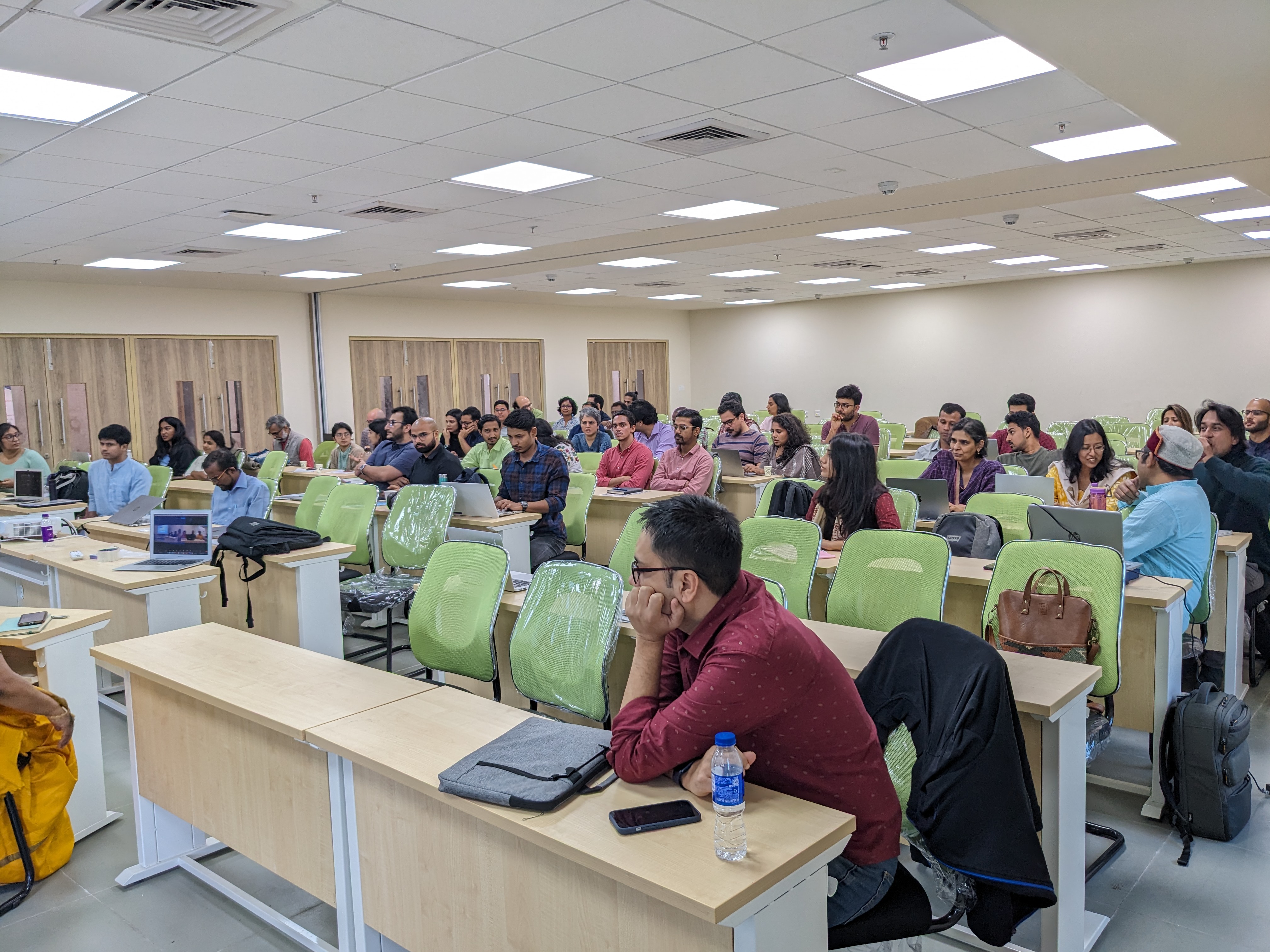
Why the network matters
STS scholarship in India has long been intellectually rich but institutionally dispersed. It has lived across sociology, history, anthropology, policy studies, public health, environmental studies, engineering education, media studies, law, and many other locations.
STS-IN was formed to give this dispersed field a shared public infrastructure: a place where scholars, students, teachers, practitioners, and publics can find one another, make work visible, and build conversations that do not disappear after a single workshop or event.
The network begins from a social-scientific understanding of technoscience. Laboratories, data systems, dams, vaccines, platforms, classrooms, clinics, and infrastructures are not only technical objects. They are also arrangements of power, labour, expertise, imagination, public trust, and everyday life.
Teaching
Building concepts, syllabi, and classroom practices for STS in Indian contexts.
Dialogue
Creating spaces where disciplines, institutions, and publics can speak across their differences.
Research
Supporting collaborative inquiry into technoscience, power, expertise, and social life.