Current Layer
NEXUS Publication
The editorial and intellectual layer of the STS-IN platform.
NEXUS / Report-back
STS-IN Roundtable Report at EASST-4S 2024 "Building STS Networks: Motivations, Strategies, Challenges."
A roundtable report on building STS networks, with attention to motivations, strategies, and institutional challenges.
Author
STS-IN Roundtable Desk
Published
1 January 2024
Read
9 min read
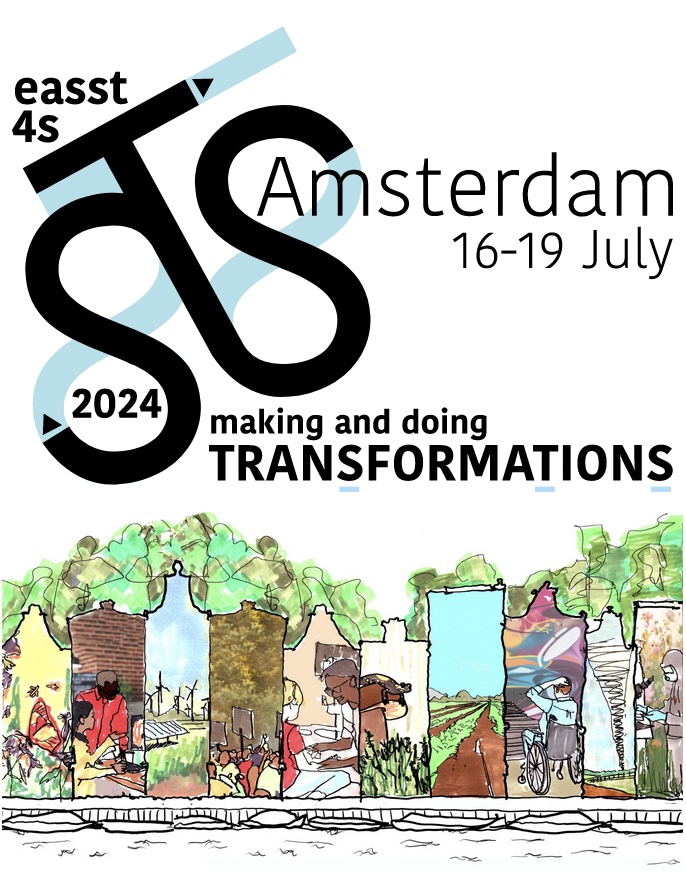
At 4S 2024, the STS-India network organized a roundtable on “Building STS
Network: Motivations, Strategies, And Challenges.” The effort was aimed towards
“learning from experiences of building STS networks” with Duygu Kasdogan,
affiliated to the Turkey STS group, Noela Invernizzi, former president of the
ESOCITE, Angela Okune from Naibori, Kenya, Thao Phan from AuSTS, and Wen-
Hua Kuo from Taiwan STS (?) and the current president of 4S. In forging different
networks into conversation, the roundtable also explored ways for collaboration
between different STS networks. Naveen Thayyil from the STS-IN network, moderated
the session.
Wen-Hua Kuo began the roundtable with a note that 4S has historically supported
initiatives toward transnationalizing STS and continues to do so. He also emphasized the need to build a living archive of the society's transnationalizing efforts.
Following Wen-Hua, Duygu Kasdogan Assistant Professor, Izmir Katip Çelebi
University, Turkey, emphasized that the STS network in Turkey was formed to better
understand, analyze, and democratize the country’s Science, Technology and
Innovation policies. Even as the network was formed for a scholarly response to the
national S&T development, the network desired to define it beyond national
boundaries. Many groups shared their sentiment to locate STS beyond the
boundaries of a nation. Thao Phan, 4S council member and research fellow, Monash University, shared that the STS network in/Australia (AuSTS) was forged during an austerity moment in the country’s universities. This, they claimed, encouraged members of AuSTS to look outwards and organize the network as transnationally as possible. Born out of Melbourne as a student-led initiative, AuSTS remains committed to transnationalise
STS with events, and associations with international networks like 4S and TransAsia
STS.
Angela Okune, Director of Programs, Code for Science & Society shared about
networking with STS scholars in Kenya during her term at iHub, Nairobi. Her insights
highlighted the problems faced by scholars with a relatively smaller
network of academicians. This, she highlighted, also provided opportunities to
interact more with technoscientists in the region. As STS scholars in Kenya barely
met within the region, they were pushed to ask, “What does it mean when people of a
country-based network meet only in meetings outside of the country?” Angela’s
comments shed light on how global disparities shape conferencing practices and
modalities.
Noela Invernizzi, Associate Professor Federal University of Paraná (Brazil), shared
her experience of being associated with ESOCITE, The Latin American Association
of Social Studies of Science and Technology, founded in 1995 (?). She outlined the
generations of STS scholarship in Latin America with the first generation, in the 60s
and 70s, occupied with policy oriented studies of science and technology,
developmental debates, etc. The second generation of scholars were affiliated with
STS programs in European and Northern American universities in 1980s. The
successive generations from the 90s onward witnessed progressive institutionalization of the field within Latin America leading to scholars trained in both Latin America and foreign institutions. Noela emphasized that ESOCITE strategies like annual prizes for scholarship and academic activities, and establishing journals like REDES, Tapuya strengthened the society’s activities.
Following Noela, Naveen Thayyil, Associate Professor at Indian Institute of
Technology, Delhi, outlined the ongoing activities of the, STS-IN, the STS India
network. Such activities include writing fellowships for doctoral students, workshops
for STS scholars in or studying India, NEXUS blog, etc. He stated that the network is
in its early stage with an aim to bring together scholars science and technology in
India as a community of researchers. He expressed the interest in bringing together
and collectivizing strategies of various regional STS networks for the
transnationalization of current and future STS scholarship.
Photo Credit: EASST-4S
This Report was prepared by Misria Shaik Ali
Suggested citation
STS-IN Roundtable Desk. “STS-IN Roundtable Report at EASST-4S 2024 "Building STS Networks: Motivations, Strategies, Challenges.".” NEXUS, STS India Network, 1 January 2024.