Current Layer
NEXUS Publication
The editorial and intellectual layer of the STS-IN platform.
NEXUS / Essay
What Can this Stinking Dump Yard Tell Us About Technosolutionism?
A grounded reflection on waste, expertise, urban infrastructure, and the limits of technical fixes.
Author
STS-IN Contributor
Published
1 June 2026
Read
10 min read
By Ravi Bhushan
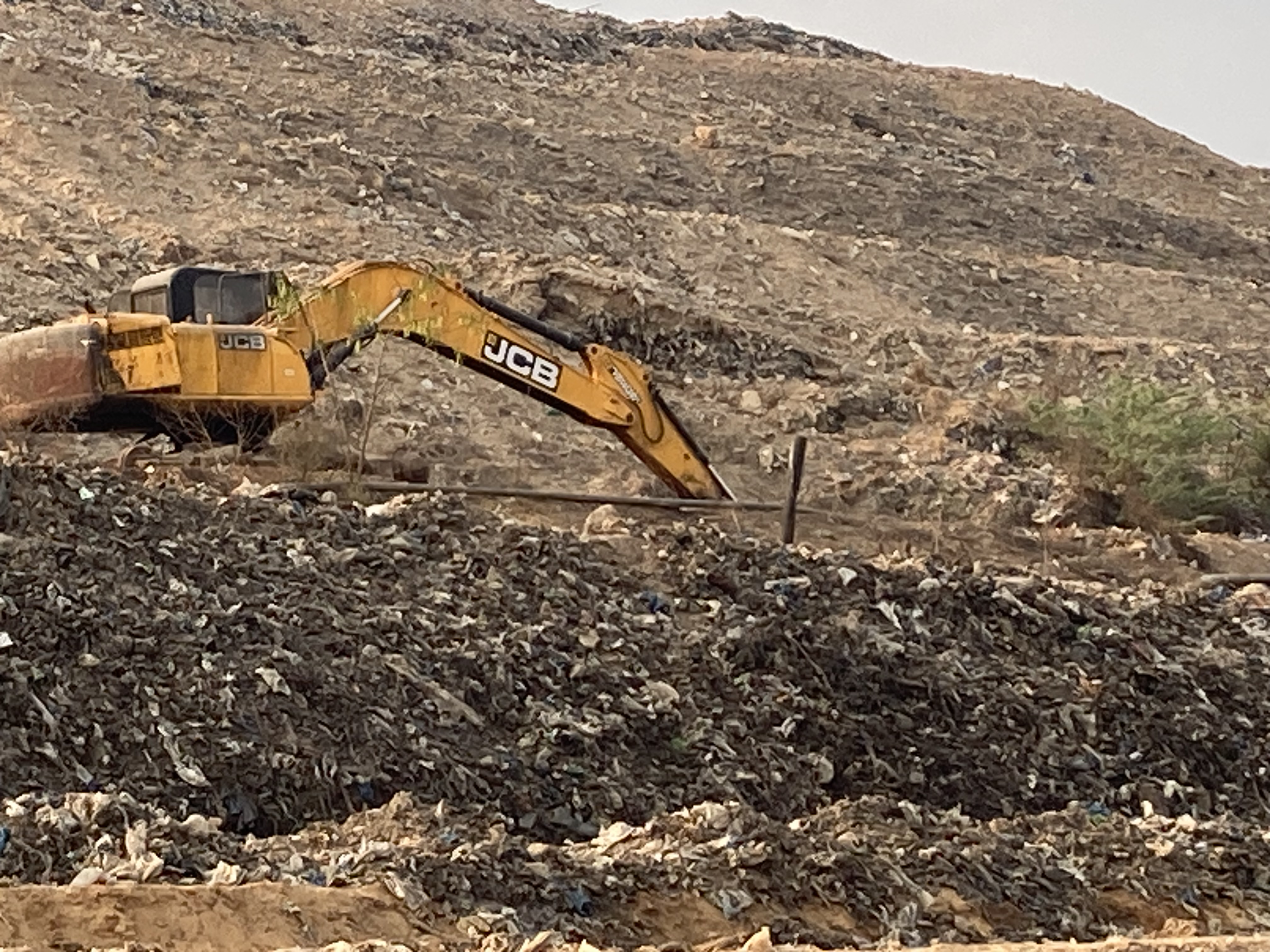
Nestled away from the commotion of the city, my campus is on the peripheries of the Hyderabad Metropolitan Region. The greenery, clean air, and quiet environment can be blissful for someone who has always lived in the middle of the city. However, on most mornings, I wake up to a strong, pungent stench. The lingering odour become so mundane for most of the residents that they barely even noticed it anymore. Given my research in air quality, I became interested in the source of the smell. After some probing, I found that the source of this strong odour is the Jawahar Nagar dump yard about 3 km from the campus. Given the constant presence of the odour, and my interest in air quality, I decided to explore the dump yard.
Spread over 400 acres, the dump yard is situated in Jawahar Nagar around 23 kilometres from Secunderabad. Recognised as a village till 2019, Jawahar Nagar has transformed into a municipality on the peri-urban fringes of the Hyderabad Metropolitan Region (HMR). Being the only major dump yard of Hyderabad, it receives a staggering 7000 metric tonnes of waste a day; posing a substantial environmental threat to the locality. The origin of the dump yard goes back to the late 1990s when it was created through a government order for the neighbouring localities. Over the subsequent decades, Jawahar Nagar became the only dump yard for Hyderabad, provisioning for a population of around 8 million (Nanisetti, 2023).
The dump yard is managed by the Greater Hyderabad Municipal Corporation (GHMC). However, in 2009, Ramky Enviro Engineers Ltd was given the contract of processing and disposal of solid waste from the dump yard. The establishment of a solid waste management unit and waste-to-energy plants was supposed to solve the issue of untreated waste at the dump yard. However, the policymakers did not consider the unintended consequences of the waste processing plant and the increased magnitude of waste in the dump yard (TSPCB, 2021).
Living in the shadow of the dump yard
In the last few years, the ill effects of the dump yard have extended way beyond its boundaries. The residential colonies within a radius of 5-6 km viz. Balaji Nagar, Dammaiguda, Kapra, Yapral, and Sainikpuri face the strong olfactory nuisance. This chronic exposure to malodorous air not only impacts their quality of life but also affects the psychological, and physical well-being of the individuals. The impact of both air pollutants and odour is spatially distributed based on the proximity to the site. A recent affidavit filed by Ramky enviro. in the National Green Tribunal highlights that the stench from the dump yard is unavoidable due to the nature of the processing facility. The process of generation of energy from waste includes the release of odour toxins, and gases (TSPCB, 2021). The promise of technology to control and contain the waste has led to a broader issue of pervasive stench throughout the year. This portrays the limits of techno-solutionism when implemented in complex settings without understanding its unintended outcomes.
The localities in the close vicinity of the dump yard are severely affected by odour, air pollutants, and contamination of groundwater. During multiple visits to these localities, it was impossible to find individuals in public spaces without their faces covered. Scheduled caste communities dominate the residential localities like Ambedkar Nagar and Balaji Nagar that share borders with the dump yard. Many of the residents are migrants who work in the nearby factories or are dependent on the informal economy of waste. In these localities, odour from the dump yard is so strong that a small sniff is enough to make an outsider nauseous.
Responses from the community
The response to this problem from the communities is differentiated and shows how air pollution as an issue is perceived differently by different people. Discussions with residents of Balaji Nagar and Ambedkar Nagar highlighted their dependence on the informal economy of waste, and different factories that operate in the neighbouring localities. Despite being most severely affected by the dump yard, these communities are caught in a web where their livelihoods take precedence over health considerations. The lack of awareness of the ill effects of poor air quality, lack of better livelihood options, and limited access to the means of communication make their everyday lives more precarious.
Currently, advocacy around the odour, and the need for improved air quality in the affected localities is predominantly led by civil society organisations of the residential societies, and gated communities situated further away from the landfill. They use tools such as social media campaigns, annual marathons, letters to the concerned authorities, and rallies to amplify their voices. The major demands of these campaigns – spearheaded by civil society organisations such as the Federation of Northeastern Colonies of Secunderabad – include halting the waste processing operations, shifting the dump yard, and capping the waste. In the last few years, the issue has gained political traction, especially in the recent Telangana elections with major politicians promising a quick resolution; however a solution remains a distant dream.
There is a noticeable absence of the most vulnerable members residing near the dump yard from these advocacy campaigns. The nature of these campaigns also raises some pertinent questions of environmental justice where the vulnerable communities who are most affected are not able to voice their concerns because of a lack of awareness and an absence of avenues.
The Jawahar Nagar dump yard is a stinking example of the failure of centralised planning in the face of rapid urbanisation. Effective and inclusive solutions to this issue will require interdisciplinary collaborations between municipalities, community members, policymakers, experts, and private players.
References:
A. R. Choudhury, B. K. . Rao, N. S. Singh, A. . Begum, and B. K. R. Rao, “Techno-commercial Assessment of Concurrent Municipal BrownField Reclamation Procedures: A Pivotal Case study of Jawahar Nagar Dump Site”, 2.0, vol. 1, no. 1, pp. 23-33, Oct. 2022
Nanisetti, S. (2023, March 16). Toxic Trash Towers over Hyderabad. The Hindu.
Nitin B. (2019, December 4). Hyderabad's Jawahar Nagar dumpyard is bursting but merely shifting it is not a solution from The News Minute : Retrieved 13 February 2024.
Telangana State Pollution Control Board report submitted to NGT. 2021.Retrieved 12 February 2024.
- - - - - - - - - - - - - - - - - - - -
Ravi Bhushan is a joint doctoral candidate with La Trobe University, Australia and BITS Pilani, Hyderabad Campus. His research is focused around understanding the spatio-temporal nature of peri-urban expansion and locating the issue of air quality in these peripheries.
- - - - - - - - - - - - - - - - - - - -
Image by Ravi Bhushan
Suggested citation
STS-IN Contributor. “What Can this Stinking Dump Yard Tell Us About Technosolutionism?.” NEXUS, STS India Network, 1 June 2026.