Current Layer
NEXUS Publication
The editorial and intellectual layer of the STS-IN platform.
NEXUS / Report-back
Reflections from the Second Energy, Environment, and Climate Reading Group
A second-session report-back on energy, environment, climate, and public scholarship.
Author
Energy, Environment, and Climate Reading Group
Published
1 January 2025
Read
6 min read
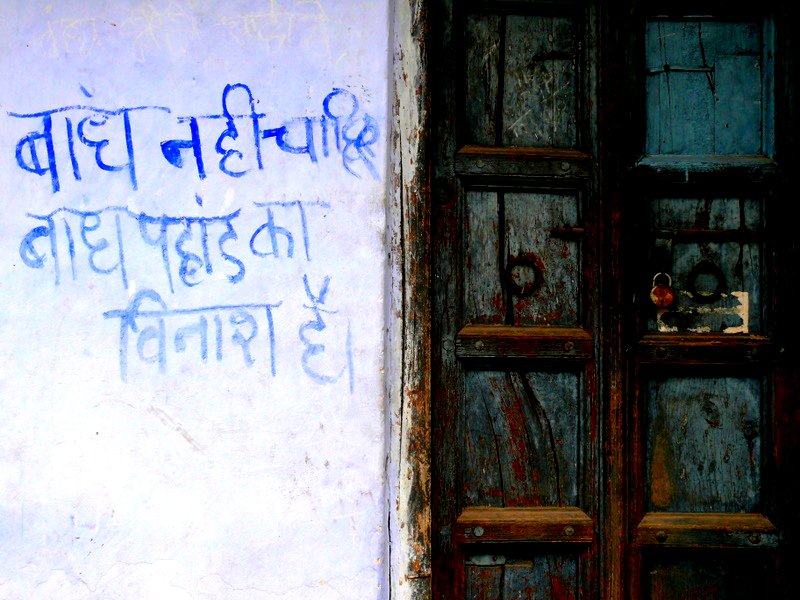
Image title: A Protest Against Tehri Dam, Garhwal
ImageCredits: This image was taken from Flickr.com, created by Lingaraj GJ
The Energy, Environment, and Climate reading group of the STS India Network organized its second reading discussion on environmental scholar Mukul Sharma’s article “Passages from Nature to Nationalism: Sunderlal Bahuguna and Tehri Dam Opposition in Garhwal.” Misria Shaik Ali, Postdoctoral Fellow at IIT-Delhi, facilitated the discussion.
Misria provided a brief description of the Tehri Dam that touched upon its location, ecological aspects, and history. In step with providing a brief description of the Committee for Struggle against the dam (TBVSS), Misria juxtaposed the scientific and developmental critique of the dam concerning its tolerance to earthquake and socio-economic impacts on residents, alongside the eco-religious claims of Sunderlal Bahuguna, the face of the protest against the Tehri Dam. Drawing on Sharma’s ethnographic account on the movement, Misria commented on how River Ganga on which Tehri Dam is located, was portrayed as “Holy Divine Mother” and subsequently framing protecting Ganga as “Gangatva” which “is Hindutva” and “Rashtratva.” Protection here was envisaged through, as the presentation addressed, an “alternative” religio-political “science” such as “vedic system of water conservation” according to ancient “tirth tradition.”
The presentation brought forth the entangling of the green environmental movement and the saffron Hindutva movement as expressed in Mukul Sharma’s claim that “The movement tried to establish connections between ecological and social-mythical values through scientific studies, environmental campaigns, and cultural-religious references, thus engaging in a wide gamut of environmental politics.” Deep-seated in this wide gamut of environmental politics is anti-Muslim hatred, which Mukul Sharma outlined in his paper. Much like TSSVP’s claims in Mukul Sharma’s analysis, Misria surfaced that STS (Gadgil and Guha 2000, 110) and Environmental scholarship (Subramaniam 2019) unfortunately also espouse that eco-religious and alternative developmental claims are embedded in ancient Vedas, the practice of Hinduism, and at times, these works proliferate anti-Muslimness through critique of Abrahamic religions (Shaik Ali 2022).
The presentation raised questions on the need to de-saffronize environmentalism and STS. Desaffronize here means analytically deconstructing the production of “Abrahamic” or wider “non-Indic” otherness, critically analyzing claims about eco-primitivism or nature worship, and exploring the saliences and effects of the entanglement of green and saffron on democratic theory. During the discussion, Bishal Dey, a participant, highlighted the exciting aspects of the article, including the interdependence between the Ranjanmabhoomi movement and the struggle against Tehri-Dam. At the heart of the discussion was a concern–how do STS and environmental scholars differentiate the critique of modernity that laid the foundation for STS in India from the Hindutva critique of modernity? Ravi, participant and organizer, highlighted that attention to context and the background of movement leaders play a crucial role in deciphering the difference, and the other discussants emphasized the need for scholarship to provide thick accounts of the heterogeneity of the social groups involved in social movements.
Responding to the question, “What generative tensions need to be excavated from the symmetry between STS critique of energy development projects and the alternative/”indigenous” epistemologies that are premised on Hinduism and Hindutva?” Lakshmi added that the difference between indigeneity and religion needs to be maintained. The questions raised during the discussion and the subsequent suggestion continue to occupy a central stage in environment studies, social movement studies, and STS, specifically postcolonial STS in the age of Hindutva.
References
Gadgil, Madhav and Ramachandra Guha. 2000. The Use and Abuse of Nature. New DelhiOxford University Press.
Shaik Ali, Misria. 2022. “Three Analyses of Banu Subramaniam’s Holy Science: The Biopolitics of Hindu Nationalism.” Tapuya: Latin American Science, Technology and Society 5 (1).
Sharma, M. (2009). Passages from Nature to Nationalism: Sunderlal Bahuguna and Tehri Dam Opposition in Garhwal. Economic and Political Weekly, 44(8), 35–42
Subramaniam, Banu. 2019. Holy Science: The Biopolitics of Hindu Nationalism. Seattle, WA: University of Washington Press.
Misria Shaik Ali is a post-doctoral fellow at the Indian Institute of Technology, Delhi. Her research aims to unpack the nationalist, agrarian, and tribal articulation of "indigeneity" in India's nuclear history/order. It aims to contribute to Science and Technology Studies, Environmental Humanities, and Contemporary Political Studies of India through a recursive historical and ethnographic analysis of each stakeholder's sense of belonging with uranium-rich soil.
Suggested citation
Energy, Environment, and Climate Reading Group. “Reflections from the Second Energy, Environment, and Climate Reading Group.” NEXUS, STS India Network, 1 January 2025.