Current Layer
NEXUS Publication
The editorial and intellectual layer of the STS-IN platform.
NEXUS / Report-back
Reflections from the First Meeting of the Feminist STS Reading Group
Notes from a reading group conversation on feminist STS, care, embodiment, and research practice.
Author
Feminist STS Reading Group
Published
25 April 2026
Read
7 min read
Lakshmi Krishnakumar
More about the STS India Reading Groups here.
The online meeting of the first feminist STS group took place on 27th February 2024. The reading chosen for this was Banu Subramaniam’s article titled Snow Brown and the Seven Detergents (2000). The article took the narrative form of a short story, where an Indian woman had gained admission to a prestigious graduate school in the West. However, in fitting into Western academia's culture and structural designs, she is forced to change her identity, thus erasing crucial aspects of her own intellectual, social, and personal realities. Through this process, she seeks the opinion of a witch-like figure, who has also been shunned by the academy for being rebellious. In the end, Snow Brown becomes Snow White and soon after, dies, following which the story takes three alternative endings.
Annapurna Mamidipudi initiated the discussion; she gave a quick summary of the reading, and in addition to the three endings, Annapurna also added an ending of her own, where Snow White slowly becomes Slow Brown again, and the seven detergents fall to the ground and are broken as meanings of almost-forgotten sayings and names are revealed.
With this start, the discussion went through many topics and themes, all the while harking back to the piece, even when we digressed from it.
Aswathy, for example, while referring to the obviously natural sciences setting of the article stated that this experience would be similar across disciplines. There were many comments that came up during the discussions. Various participants commented on diverse aspects of the paper; some of the comments were on the feasibility of doing science itself and how some kinds of research were considered to be more ‘prestigious’ than others and thus were more likely to be approved for research. In the paper, Snow Brown’s aim to study mutualisms in nature is derided, and she is told to study competitiveness instead. The discussion around this topic showed how there exists within academia also a sense, however misplaced, about what deserves to be studied and what doesn’t.
Another aspect of the paper that came up during the discussion was the question of identity. When Snow Brown dies, she dies as a white woman; thus, the erasure is not just of her various identity markers and signifiers but also of her very existence in the most fundamental and biological forms. There was also a critical element to these elements, in that some participants pointed out how these identities are not mutually exclusive. This was also tied to a discussion on a photo of female scientists at ISRO wearing saris and markers of religion and caste and how a certain Savarna identity was being expressed within the same spaces as that of scientific practice.
Some other topics that were discussed were about the focus on the appearance of the women scientists and also the double burden of female scientists.
Overall, the meeting lasted for an hour, and it was a productive one. I think starting the discussion on feminist STS with an article that used an unconventional narrative form (that of a fiction piece) was a very brilliant idea since it allowed one to exercise one’s imagination, and to borrow from Audrey Lorde, ‘poetry is the way we help give name to the nameless so it can be thought’ (2007). Annapurna’s addition of her own ending to the story also expressed new ways of dealing with texts such as these, which do not remain bound by the structures of immutability but are rather open to not just being talked about but also to being rearticulated and reworked. I think that as more and more social science researchers bring in their non-academic works, such as art and fiction writing, into their academic works, we will see a rise in the production of works that are more easily accessible and also that provide multiple avenues to express the positivity and the experiences of non-white, non-male scientists in academics. The meeting ended with a note on the attendees joining a common WhatsApp group, which has been active in sharing articles that would interest us. It was agreed that we would meet again to discuss more texts. If the first meeting is anything to go by, the future sessions of the group would open up more opportunities to critically engage with texts in feminist STS and to also bridge these readings with the other tangential readings and material that we are constantly exposed to, and also provide a space to question and dismantle an academia that is dominated by a Euro-American sensibility, and in its stead, place someone like Snow Brown in a space where she wants to practice science without having to bow down to the Collective Conscience of the White Patriarchs or having to imbibe the seven detergents.
Lakshmi Krishnakumar, a doctoral student at the French Institute of Pondicherry; and a member of the Feminist STS Reading Group.
- - - - - - - - - - - - - - - - - - - -
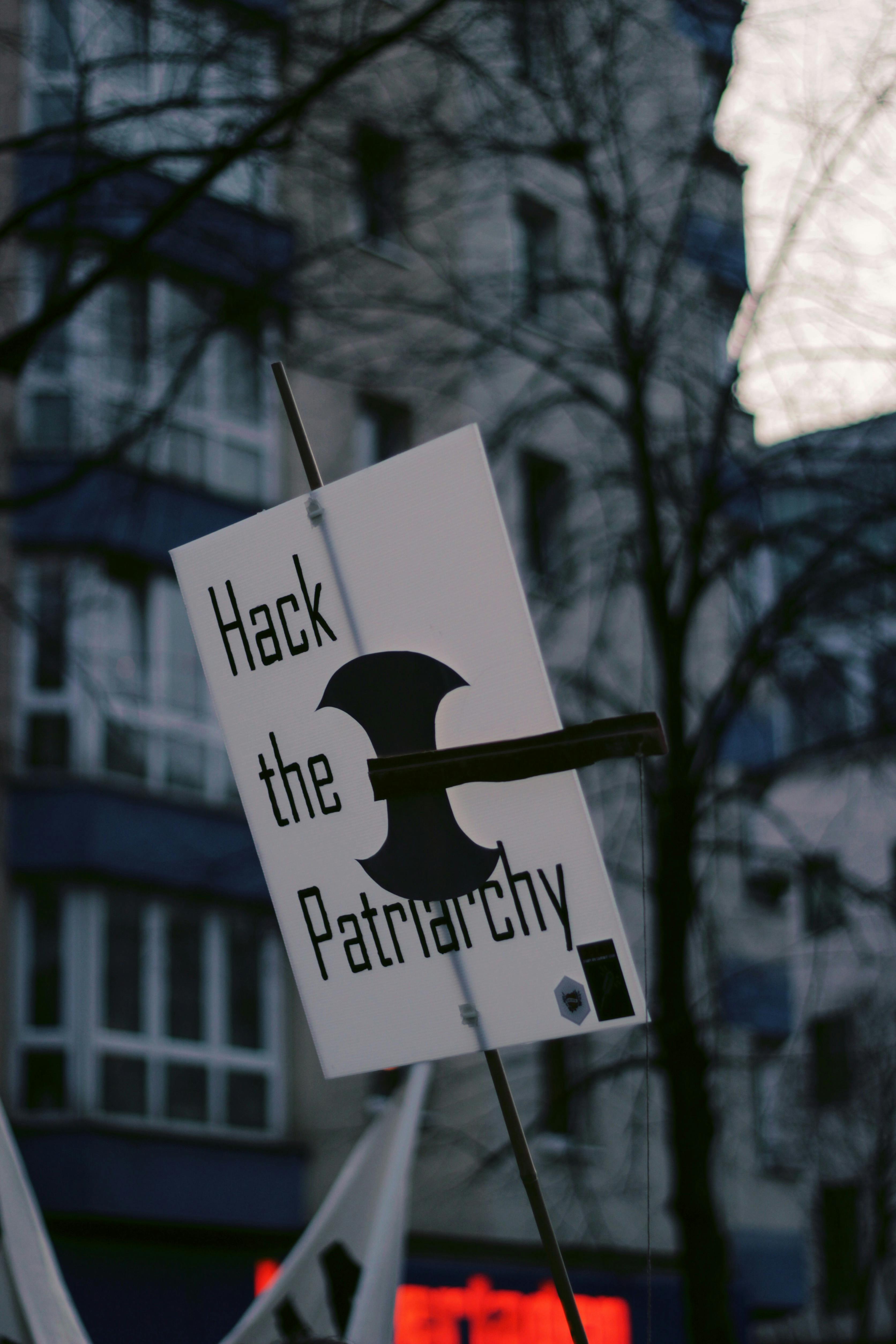
Image by Flavia Jacquier from Pexels
Suggested citation
Feminist STS Reading Group. “Reflections from the First Meeting of the Feminist STS Reading Group.” NEXUS, STS India Network, 25 April 2026.