Current Layer
NEXUS Publication
The editorial and intellectual layer of the STS-IN platform.
NEXUS / Report-back
Reflections from the First Meeting of the Digital STS Reading Group
A report-back from the first Digital STS reading group session and its emerging discussion agenda.
Author
Digital STS Reading Group
Published
3 May 2026
Read
6 min read
More about the STS India Reading Groups here.
The first meeting of the Digital STS Reading Group took place online on 27 March 2024 which discussed the text
'Global Digital Cultures: Perspectives from South Asia' by Aswin Punthambekar and Sriram Mohan
(open access version here)
For a long time, scholars working in and on the Global South have been faced with the challenge of articulating a perspective and a location that would allow analysis of various situated techno-social, cultural, and political phenomena that do not “depart from” or be in “comparison with” ideas and frameworks (arguably) generated in the Anglo-American or European (broadly, Western) world. With the twin forces of globalization and digitization wrapping the globe in a seemingly continuous and closely intertwined web of relations, finding this perspective/location has become both more urgent and more difficult, given the “everywhereness” of digital networks.
The edited volume by critical media scholars Aswin Punathambekar and Sriram Mohan (Michigan University Press, 2019) takes this problem head-on, laying out not only an analytical framework for the study of global digital cultures but also offering a set of empirically based examples from scholars studying sites across South Asia. The central proposition of the book and the framework they offer is that digital media cultures are best understood as the product of “combustible encounters between emergent data-driven and algorithmic processes on the one hand and representational logics that continue to hold sway in the news and entertainment media industries, on the other.” They ask: How do we hold together two key words—the representational and the algorithmic—and the many theoretical and methodological paradigms that cohere around them in one analytic frame? In other words, how do we hold together the socio-cultural and the socio-technical aspects of media cultures and their impact on social, cultural, and political life?
The editors’ comprehensive introduction provides a conceptual umbrella for the thirteen chapters that follow—nine of which relate to India and four to other South Asian countries (Myanmar, Pakistan, Bangladesh, and Afghanistan). The chapters are grouped under the three conceptual pillars undergirding the global digital cultures framework: platforms, infrastructures, and publics.
The larger aim of the book is to re-centre the “Global South” as a site of inquiry, pushing back against the dominant tendency to mark the non-West as “elsewhere” and "elsewhen." They argue that geography and time, along with the historical, political-economic, and social dimensions, become irrelevant to understanding digital media cultures globally, and that there is a need to “delink” the Internet from its North American trajectory and instead position South Asia as a node (or set of nodes) in an ongoing global transformation.
In effect, what the essays in the volume collectively do is reframe our understandings of media/cultural imperialism, hybridity, and the global-local dynamic while contending with concepts like labour precarity, datafication, and circulation of meaning, all of which acquire different valences in the era of digitalization. The volume is a prompt for more grounded histories of the internet and its use, work that attends to the materiality of technology in sites of (re)creation and use, and the cultures that emerge and radiate from these locations.
- - - - - - - - - - - - - - - - - - - -
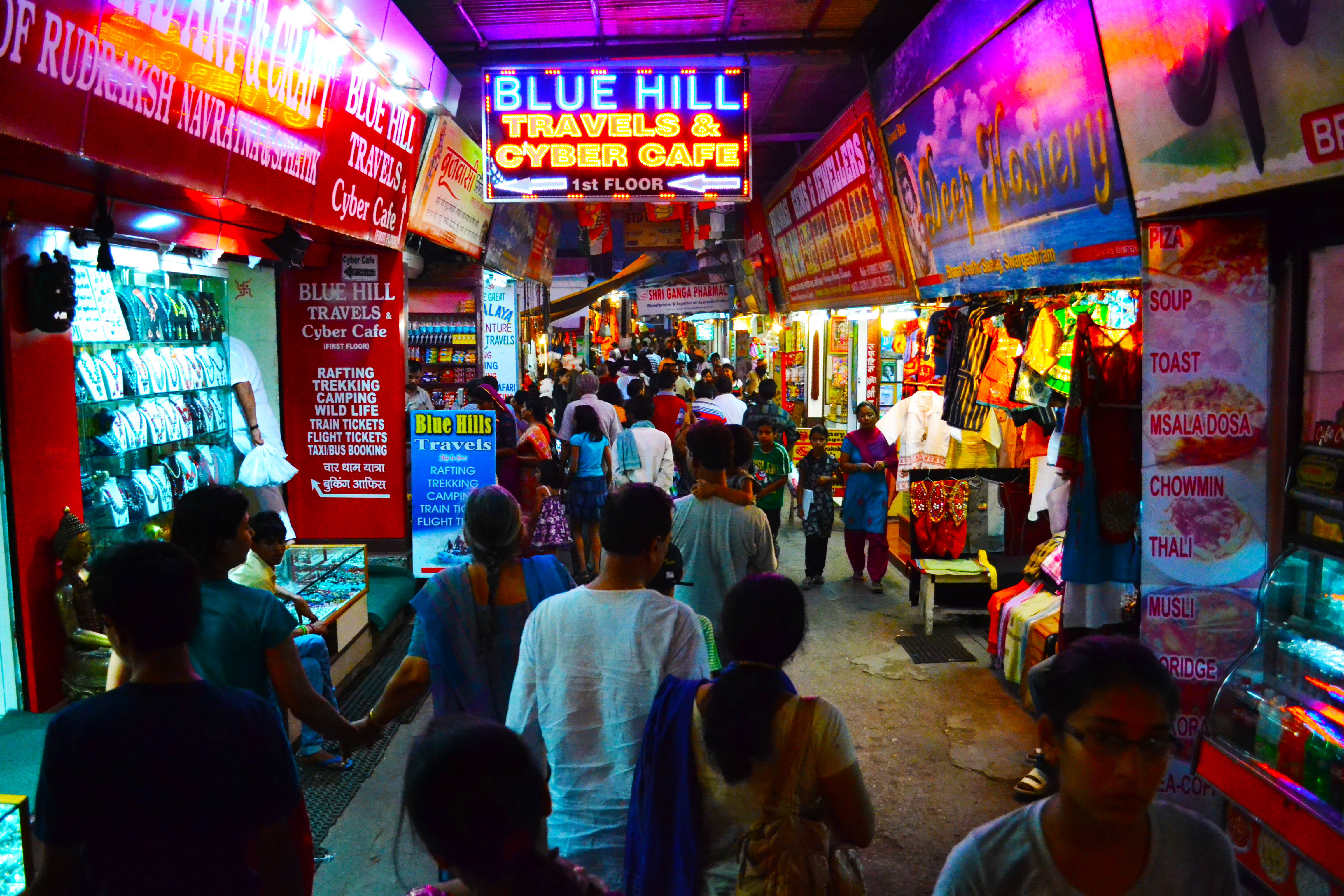
Image by RachelTara from Flickr under the CC BY-NC-ND 2.0 license
Suggested citation
Digital STS Reading Group. “Reflections from the First Meeting of the Digital STS Reading Group.” NEXUS, STS India Network, 3 May 2026.